The Sceptre S2 is the kind of watch that arrives at $499 and quietly makes a case for why you don't need to spend $1,500. Whether that case holds depends on how much you care about movement provenance.
The Verdict
At $499, the Sceptre S2 Vault is a well-made dive-adjacent automatic from a British microbrand that understands case construction better than most competitors at this price. The Miyota movement is the honest caveat; everything surrounding it is harder to fault.
The Make
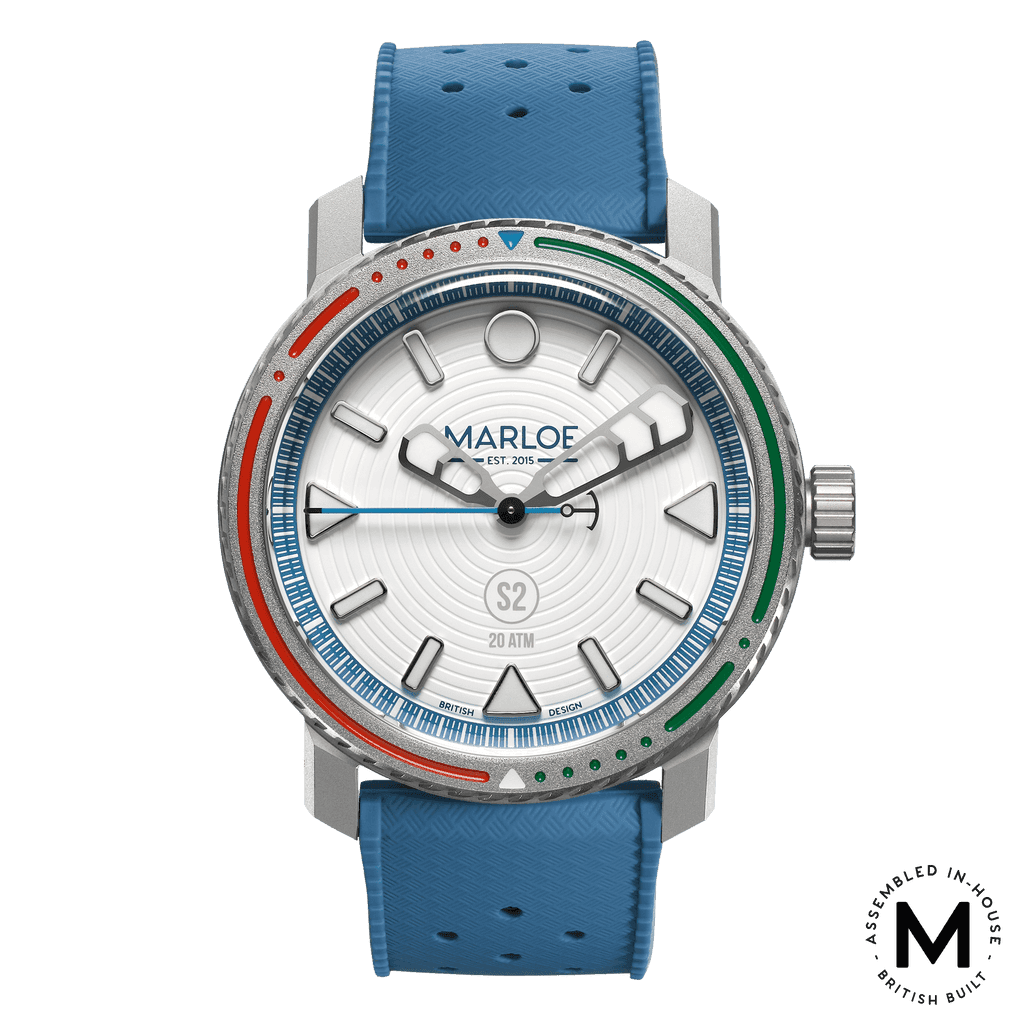
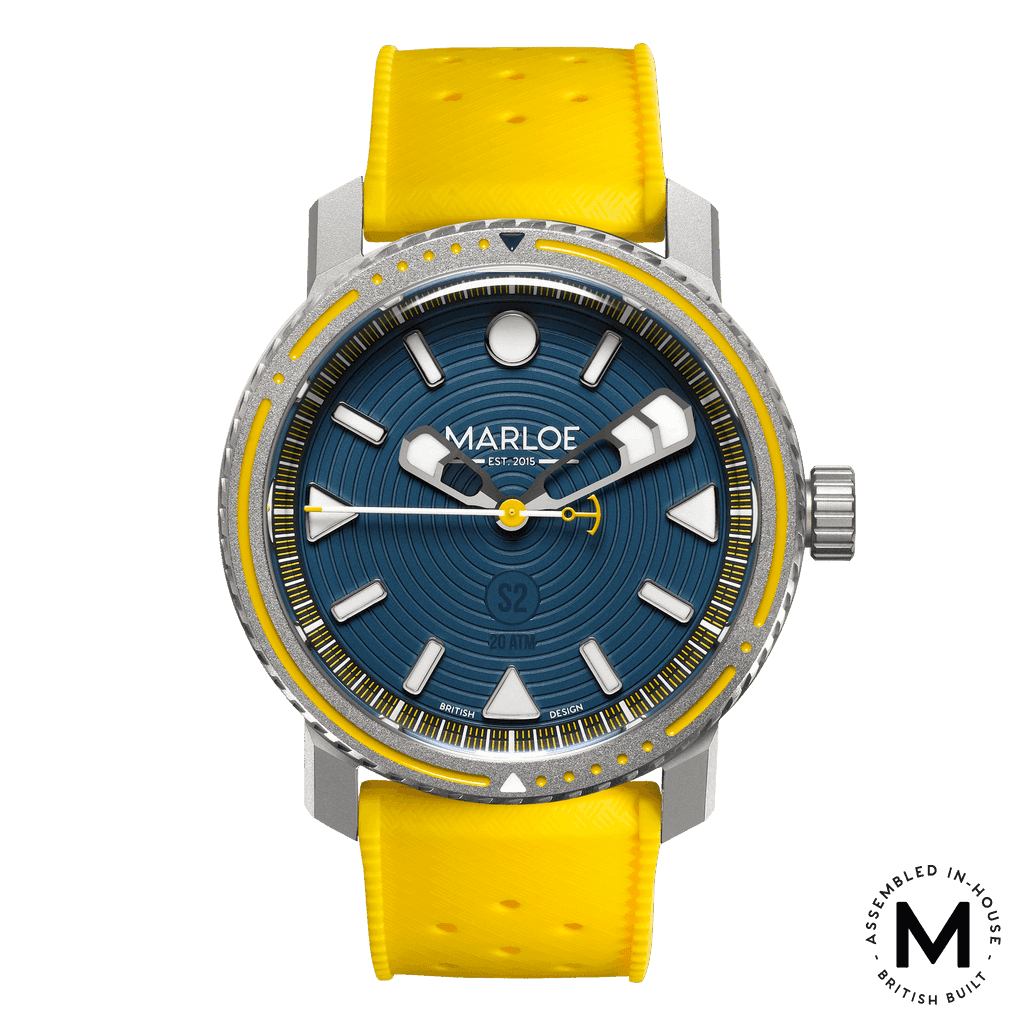
The case is 316L stainless steel, matte-blasted to a finish that reads closer to tool watch than dress watch. At 42mm across and 12.65mm thick, it sits flat and purposeful on the wrist. The sapphire crystal is standard expectation at this price; the ceramic bezel insert is a mild surprise and a practical one, since it won't scratch the way aluminium does after a few years of actual use. The bi-directional bezel has a rifled grip that holds without theatre, and the screw-down crown pushes water resistance to 20ATM, which is more than most owners will ever test.
The dial earns its keep. Marloe layers the chapter ring over a textured base, uses applied indices filled with Superluminova rather than printed alternatives, and runs a propeller-style handset that reads as considered rather than gimmicky. The exhibition caseback lets you watch the Miyota movement, which is where the main conversation starts: Marloe has not publicly confirmed the specific Miyota reference for this variant, though the Sceptre family runs on the 9039 series. The 9039 is a competent, accurate automatic with a 42-hour power reserve. It is not a ETA 2824, let alone an in-house movement, and at $499 it does not need to be. What it needs to do is run reliably and keep time within acceptable tolerances. It does.
Assembly happens in-house at Marloe's Oxfordshire workshop. That matters less than some brand copy suggests, but it does mean their in-house repairs team can service the watch without you sending it abroad.
The strap is yellow FKM rubber in a tropic style. It works visually with the Vault colourway, wears comfortably in water, and costs nothing to swap if the colour reads too loud for daily rotation.
The Fit
One size: 42mm. On a medium wrist it fills without overwhelming. The 12.65mm lug-to-lug thickness means it slides under a shirt cuff without a fight, which is more than some tool watches at this diameter can claim.
The Context
The Sceptre S2 competes with the lower end of the Seiko Prospex line, the Orient Kamasu, and other Miyota-powered British microbrands like Christopher Ward's older C60 variants. Against the Seiko SRPE53 around the same price, the Marloe offers more considered finishing on the dial and a stronger brand story, with less service infrastructure behind it. That trade is reasonable for most buyers. If you want the most legible resale market and the deepest repair network, Seiko wins. If you want something that looks like it cost more than it did and arrives with a narrative attached, Marloe makes a persuasive argument.
The Personal Note
I have not worn this one. The data suggests it scores as well on travel and layering as anything at this price, and the construction notes hold up under scrutiny. What I cannot tell you from data alone is how the matte blast weathers after two years of weekly wear, or whether the propeller handset reads as distinctive or distracting at a glance across a dinner table. That answer is personal. At $499, the cost of finding out is not punishing.